

1. Introduction
Collaborative second-language (L2) academic writing has moved from the margins of pedagogy to the center of many L2 curricula. Research shows that learners who co-author texts engage in more language-related episodes, attend more closely to form and meaning, and produce texts with greater grammatical accuracy and complexity than those writing individually. Collaborative tasks require students to externalize their reasoning about vocabulary, grammar, and discourse structure, to justify textual decisions to peers, and to negotiate revisions in real time, thereby rendering typically private dimensions of the writing process socially visible (Cheng, 2004; Zhang et al., 2022).
The same features that make collaborative writing a powerful learning tool also make it emotionally demanding. Shared responsibility for a single text, exposure to peer evaluation, and public judgment of collective effort can generate friction and emotional intensity (Anela et al., 2022; Ao et al., 2023; Csizér & Tankó, 2017). Disagreements about standards, unequal contributions, and ambiguity over textual authority may elicit anxiety and frustration, even as students experience enjoyment and pride when collaboration goes well. Despite robust evidence for its cognitive and linguistic benefits, we know little about how much emotional work students invest to keep collaboration on track, or how this work varies for learners with different levels of L2 academic writing proficiency (Cheng, 2004; Gao et al., 2024; Zhang et al., 2022).
Research in second language acquisition and educational psychology has shown that language learning is emotionally charged. In classroom settings, learners report fluctuating enjoyment and anxiety that shape engagement, persistence, and achievement (De Larios et al., 2002; Horwitz et al., 1986; Zhang et al., 2023). Control-value theory conceptualizes such achievement emotions as arising from students’ appraisals of their ability to succeed and the value they attach to the task. L2 academic writing, which demands precision, complexity, and adherence to disciplinary conventions under continuous evaluation, is especially prone to generating anxiety and self-doubt, but also achievement-related pride. Existing studies indicate that negative emotions can undermine writing performance and motivation, whereas positive emotions can partly offset these effects. However, emotions are usually treated as transient states to be measured, rather than as phenomena that students actively attempt to manage while navigating socially complex collaborative writing tasks (Dong, 2024).
Emotion regulation offers a framework for understanding this active management. In affective science, emotion regulation refers to the processes through which individuals influence the occurrence, intensity, or expression of emotions in the service of personal or social goals. Gross’s process model distinguishes families of strategies that intervene at different points in the emotion-generative process, including antecedent-focused strategies such as situation selection and cognitive reappraisal and response-focused strategies such as expressive suppression (Dong, 2024; Gross, 2015). In educational contexts, antecedent-focused strategies are generally associated with better well-being and performance than response-focused suppression. Despite the relevance of this framework, it has rarely been applied systematically to collaborative L2 academic writing, where students simultaneously manage demanding linguistic work and delicate interpersonal dynamics (Gui et al., 2021; Pritchard & Nasr, 2004; Zhang, Ao, et al., 2024).
Collaborative learning research further suggests that emotion regulation in group work is not purely individual. Alongside self-regulation, students engage in co-regulation and socially shared regulation, in which group members jointly manage emotions, norms, and strategies (Maoyi et al., 2025; Xian et al., 2024; Zhang, Ye, et al., 2024). During complex tasks, learners work to sustain a workable emotional climate by softening criticism, reframing setbacks, or adjusting participation patterns. These practices blur the line between regulating one’s own emotions and regulating those of others and raise questions about how emotional work is distributed within groups and which strategies succeed or fail (X. Li et al., 2025).
Building on these strands of scholarship, the present study introduces the construct of emotion-regulation load in collaborative L2 academic writing, defined as the frequency and strategic composition of emotion regulation strategies that students deliberately enact to sustain collaboration, categorized according to Gross’s model and situated at the level of individual collaborators. Focusing on undergraduates engaged in English-medium collaborative academic writing tasks, we ask how much regulatory effort is required, who performs it, and which strategies are mobilized. We expect that lower-proficiency students will experience higher emotion-regulation load and rely more on reactive, socially intensive strategies, whereas higher-proficiency students will employ more preventive, cognitively focused strategies, and that interactional factors such as group composition and role clarity will shape emotion-regulation load at least as strongly as formal task stages. These expectations are formalized in two research questions: which patterns of emotion regulation emerge at different stages of collaborative academic writing among groups with differing English proficiency levels, and how do these patterns shape the unfolding of collaborative academic writing in English?
2. Literature Review
2.1 Collaborative Writing
Collaborative writing (CW) is commonly defined as a writing process in which multiple authors share decision-making authority and joint responsibility for producing a single text. Once a marginal technique used mainly for occasional group projects, CW has become central in contemporary writing pedagogy as it foregrounds the inherently social nature of text production. Workplace studies show that much professional writing is collective, distributed across diverse roles, and negotiated under real-world time and accountability pressures. These insights have encouraged educators to reconceptualize writing not as a solitary cognitive act but as a socially situated activity in which ideas, language, and responsibilities are co-constructed (Horwitz, 1986; MacIntyre, 1999).
In L2 contexts, collaborative authorship rests on a strong theoretical foundation. Swain’s Output Hypothesis proposes that producing language under communicative pressure pushes learners to reorganize and refine their linguistic knowledge. Interactionist approaches similarly emphasize that negotiation of meaning and feedback during interaction help learners notice gaps in their L2 ability and test out new forms. CW tasks, by design, create precisely these conditions: partners must reach joint decisions about vocabulary, grammar, and content, which externalizes language processing that would remain hidden in solo writing. Learners explain, defend, and sometimes abandon linguistic choices in response to peer input, turning the writing episode into a rich site of metalinguistic work (Jinxiao Ginnie, 2024; Sellers, 2000).
Empirical research comparing individual and collaborative writing supports this theoretical rationale. Studies consistently find that CW elicits more language-related episodes and sustained attention to both form and meaning than individual writing, and that these episodes can translate into gains in grammatical accuracy and syntactic complexity in subsequent individual work (Liu, 2024; Mežek, 2013). Over the past two decades, CW has therefore been widely embraced as a pedagogically sound strategy for supporting L2 development, particularly in academic writing courses where students must learn to mobilize discipline-appropriate lexis and discourse structures.
For learners, CW offers several practical benefits. Groups generate more opportunities for feedback and scaffolding than solo writers, and the need to explain and negotiate decisions can heighten writers’ metalinguistic awareness. Many students also value the shared responsibility and heightened audience awareness that come with co-authoring: knowing that peers will read and rely on one’s contributions can increase task investment, while distributing workload may make demanding assignments feel more manageable (Lam, 2015; Zhang, 2010). At the same time, CW frequently introduces social frictions. Students must reconcile different writing styles, standards, and expectations about quality; they may experience unequal contributions, conflicting work habits, or uncertainty about who has authority over the text. These tensions are not incidental side-effects but core features of collaborative authorship. How they are navigated often determines whether CW becomes a productive driver of learning or breaks down under coordination problems. Yet, despite extensive evidence on its cognitive and linguistic advantages, research has not systematically theorized the emotional work that learners undertake to keep collaboration viable, nor how that work may differ across proficiency levels.
Emotion regulation (ER) refers to the processes through which people influence which emotions they have, when they have them, and how these emotions are experienced and expressed. Because effective ER is central to psychological functioning, it has been examined across multiple disciplines, from neuroscience and psychophysiology to developmental and social psychology (Lee, 2015; Zhang, Harris Ao, et al., 2024; Zhang et al., 2022). This literature encompasses both automatic and deliberate forms of regulation, highlighting substantial individual differences in preferred strategies, flexibility, and effectiveness.
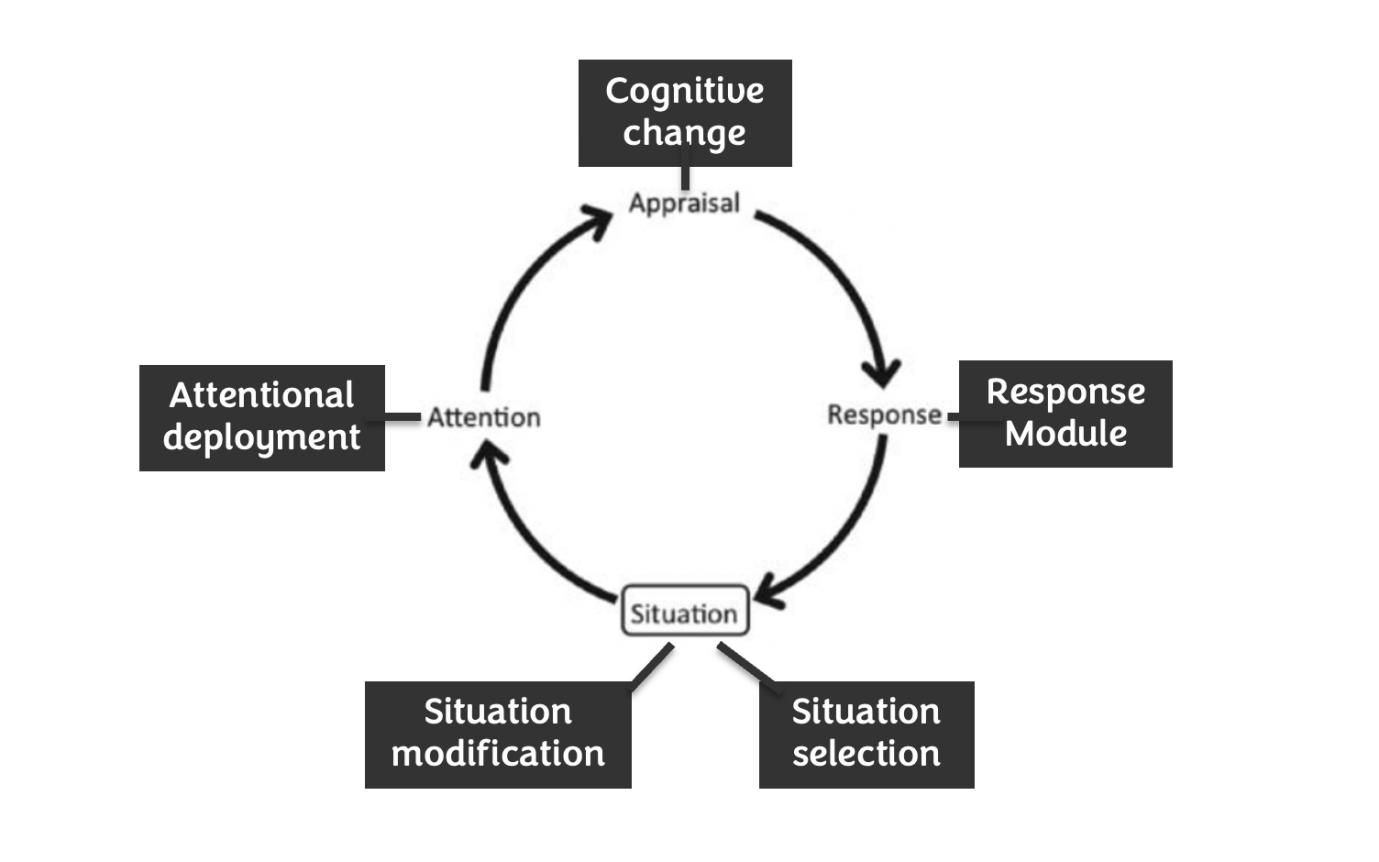
A cornerstone of contemporary ER research is Gross’s process model, which describes emotion generation as a sequence of stages and categorizes regulatory strategies according to when they intervene in this sequence (Mežek, 2013; Zhang, 2010). Situation selection and situation modification target the external circumstances likely to give rise to particular emotions, for example by choosing collaborators or structuring a task in ways that reduce anticipated conflict. Attentional deployment involves directing or redirecting one’s focus, such as concentrating on task progress rather than criticism. Cognitive change, often operationalized as cognitive reappraisal, entails reinterpreting the meaning of an event (for instance, reframing harsh feedback as an opportunity to improve). Response modulation, including expressive suppression, attempts to alter experiential or behavioral responses after an emotion is already underway, for example by masking visible frustration (De Larios et al., 2002; Sellers, 2000).
These strategy families differ in their typical consequences for well-being and social functioning. Antecedent-focused strategies that intervene early in the emotion-generative process, especially cognitive reappraisal, are generally associated with more favorable affective, interpersonal, and performance outcomes than response-focused suppression, which can reduce outward displays of emotion but leave internal experience largely unchanged and may impair communication (Horwitz, 1986). In educational settings, students who habitually employ reappraisal and other adaptive strategies tend to show higher engagement, persistence, and academic achievement than those who rely heavily on suppression or avoidance. Importantly, regulatory efforts themselves are not cost-free: they require cognitive resources and can shape subsequent motivation, attention, and strategy use (MacIntyre, 1999).
Despite the richness of this theoretical framework, it has seldom been applied in detail to students’ experiences of collaborative academic writing. Studies of L2 learning have begun to discuss ER, but they often use broad coping classifications or focus on trait-like tendencies rather than mapping specific strategies to concrete learning episodes (Zhang et al., 2025; Zhang et al., 2022). A finer-grained analysis is needed that uses the process model as an organizing lens, identifies which strategies students report using before, during, and after emotionally salient moments in collaboration, and examines how the mix of strategies shifts across social and task conditions, including differences in language proficiency.
Emotion regulation (ER) refers to the processes through which people manage and modify their emotions to meet situational demands or achieve goals. Given the importance of effective ER to mental health and everyday functioning, the topic has been extensively studied across disciplines. This research spans physiological aspects of emotion control as well as developmental and social differences in regulatory tendencies across age, race, and gender (Mežek, 2013; Wu et al., 2025).
A cornerstone of the field is Gross’s process model of ER, which categorizes strategies by their timing in the emotion-generative process. As illustrated in Figure 1, people can regulate emotions by selecting or modifying a situation, directing their attention, changing how they appraise the situation, or modulating their emotional responses after they arise. These five strategy families—situation selection, situation modification, attentional deployment, cognitive change (reappraisal), and response modulation (suppression)—have distinct effects on emotional experience and social interaction (Pecorari et al., 2012; Qiu et al., 2025).
In educational settings, students with stronger emotion-regulation skills tend to show higher engagement and well-being. Moreover, proactive strategies that alter situations or interpretations are often more adaptive in social contexts than reactive strategies like suppressing one’s feelings. Despite the richness of this theoretical framework, it has seldom been applied to the analysis of how students manage emotions during collaborative academic writing. Studies of L2 learning have only begun to examine emotion regulation in writing contexts, and they often use broad “coping” labels instead of identifying specific strategies and their timing. A finer-grained analysis is needed that maps the process-model categories onto actual collaborative writing episodes and determines whether the mix or frequency of strategies shifts under different conditions (such as varying peer relationships or proficiency levels).
2.2 Emotion Regulation in Collaborative L2 Writing
Writing in a second language is widely reported as one of the most challenging skills for learners. It imposes heavy cognitive demands, requiring retrieval of appropriate vocabulary, precise grammar, and cohesive discourse organization, often under time pressure and evaluative scrutiny. Unsurprisingly, L2 writers frequently report a complex mix of emotions—frustration, anxiety, shame, but also pride and satisfaction—when composing in the L2. These emotional fluctuations, layered on top of high cognitive load, can at times overwhelm students’ capacity to persevere with demanding tasks (Pintrich & Zeidner, 2000).
In collaborative writing settings, these challenges tend to intensify. Students must simultaneously manage the linguistic and content demands of the assignment and the interpersonal dynamics of working with peers. Disagreements over ideas, imbalances in effort, or clashing work styles can trigger negative emotions that compound the inherent difficulty of writing in a second language. Differences in proficiency can further sharpen these tensions if lower-proficiency students feel exposed or marginalized, or if higher-proficiency peers feel overburdened by expectations to carry the group linguistically. Many learners recognize, at least implicitly, that managing emotions is important for maintaining productive collaboration, and they report adopting ER strategies such as reframing challenges in a more positive light, downplaying criticism, or suppressing irritation to avoid open conflict (Sellers, 2000; Wertsch, 1979). However, these strategies vary in effectiveness, and habitual reliance on suppression can place students under additional strain.
Research on socio-emotional dynamics in collaborative learning offers important insights, although it has rarely focused specifically on L2 academic writing. Work by Järvenoja et al. (2018) shows that complex, open-ended group tasks regularly provoke socio-emotional tensions related to uneven participation, conflicting goals, and critical peer feedback. Learners respond with both individual and group-level regulatory strategies, ranging from explicit negotiation of norms to subtle efforts to maintain a positive climate. Subsequent studies trace how effective co-regulation and socially shared regulation help groups sustain engagement and task focus over time, contrasting these trajectories with groups that become mired in persistent conflict. Bakhtiar and co-authors, for example, observed that groups with negative emotional climates engaged in frequent but often ineffective regulatory attempts, including superficial reassurance and suppression, whereas more successful groups proactively modified situations and engaged in collective cognitive reappraisal to reframe difficulties.
Studies that link socio-emotional regulation more directly to collaborative writing outcomes suggest that effective ER can enhance both process and product. In online L2 writing environments, teams that report better emotion management tend to show higher enjoyment and engagement, and supportive peer interactions can indirectly improve group climate and perseverance (Wood et al., 1976). Yet much of this work has focused on short-term or technology-mediated tasks, often using exam-style prompts, and has not examined how differing proficiency levels among group members shape the emotional demands of collaboration. Insights from broader collaborative learning research suggest that social design factors—such as group composition, role clarity, and communication patterns—are more consequential for emotional strain than the specific stage of task completion. This raises questions about whether mixed-proficiency teams face distinctive emotion-regulation challenges and whether particular phases of writing (planning, drafting, revising) are experienced as especially demanding.
Within L2 education, interest in emotions and ER has grown rapidly but unevenly. A substantial body of work now examines foreign language enjoyment and anxiety, their antecedents, and their links to achievement and willingness to communicate. Additional studies investigate relationships between L2 writing anxiety, self-efficacy, and writing performance, underscoring the importance of affective factors for learners’ engagement with writing tasks. Parallel developments in self-regulated learning research explicitly incorporate ER strategies into models of academic regulation. However, only a small subset of studies addresses ER in collaborative L2 writing (Gross, 2015; Horwitz, 1986). Those that do frequently concentrate on online contexts or employ broad coping categories rather than systematic, process-model-based classifications of strategies and their timing. Intervention studies on web-based collaborative writing show that explicit regulatory scaffolds can alter interaction patterns and perceived emotional climate, but they rarely differentiate which specific ER strategies students deploy or how intensely.
Even fewer investigations focus on face-to-face collaborative L2 academic writing, where evaluative pressures and interpersonal authority dynamics are particularly acute. Reviews of collaborative writing research often mention affect only peripherally, for example as a reason for students’ resistance to group work or their preference for familiar partners, without analyzing ER processes as outcomes in their own right (Gui et al., 2021; Lee, 2015). Case studies of L2 collaborative writing motivation illustrate that perceived roles, relative proficiency, and motivational alignment strongly shape participation patterns, hinting at underlying emotional processes that remain largely unexamined. Interaction-focused research similarly recognizes tensions surrounding criticism, unequal participation, and role negotiation, but typically stops short of quantifying the emotional labor required to navigate these challenges or linking such labor systematically to L2 proficiency.
Against this backdrop, the present study positions emotion regulation not as a background condition but as a central dimension of collaborative L2 academic writing. We adopt a multi-level view of regulation that acknowledges self-, co-, and socially shared regulation, yet we operationalize emotion regulation in terms of the strategies that students consciously report using toward themselves, peers, or the group to manage emotions during collaborative academic writing. Within this framework, we introduce the construct of emotion-regulation load to denote the overall amount and strategic composition of ER that individual collaborators must deploy to keep group work on track, categorized according to Gross’s model. This construct directs attention to how frequently students regulate emotions, which strategies they rely on, and how these patterns vary by English proficiency, team composition, and phase of the writing process. By integrating insights from CW, ER theory, and socio-emotional regulation research, the study seeks to illuminate the emotional labor underpinning collaborative L2 academic writing and to inform instructional designs that distribute this labor more equitably.
3. Methods
3.1 Research design
This study used a convergent mixed-methods design to investigate how learners’ perceived L2 academic writing proficiency is associated with the frequency and types of emotion regulation (ER) strategies used during collaborative academic writing. A convergent design was chosen because ER is both an individual cognitive process and a social practice, and the aim was to align quantitative estimates of ER frequency with qualitative accounts of how specific regulatory actions unfolded in real collaborative settings. Quantitative and qualitative data were collected within the same semester while students were engaged in ongoing group writing projects, analyzed separately within a shared theoretical framework, and then integrated during interpretation(Cohen, 1994; Freedman, 1985, 1991).
In the quantitative strand, a self-report survey measured two key constructs: perceived L2 academic writing competence and the frequency with which students used specific ER strategies during collaborative writing. Both constructs were operationalized as multi-item Likert-type indices, with ER items explicitly aligned with the five strategy families in Gross’s process model. In the qualitative strand, semi-structured interviews elicited detailed narratives of emotionally salient collaborative episodes, including interpersonal tensions, negotiations of authority, and attempts to repair or prevent socio-emotional strain. Gross’s process model provided the common conceptual frame for instrument design, coding, and mixed-methods integration, allowing us to move beyond generic notions of “coping” and to analyze ER in strategy-specific terms. The primary quantitative hypothesis was that higher perceived L2 academic writing competence would be associated with lower overall ER frequency (emotion-regulation load) during collaborative writing. Qualitatively, we examined how students described their regulatory efforts in concrete situations and how these descriptions varied across perceived proficiency levels. Integration occurred first at the coding stage, where process-model categories were applied to both survey items and interview data, and later at the interpretive stage through a joint display that linked proficiency bands, ER strategy categories, and illustrative quotations (D. Li et al., 2025).
3.2 Participants and context
Participants were undergraduate L2 students enrolled in an English-medium degree program in which collaborative academic writing is a core curricular component. Intact pairs and small groups were recruited from courses that required multi-week, research-oriented group assignments, ensuring that participants were already engaged in substantial collaborative writing. These assignments typically involved identifying and narrowing a topic, reviewing and synthesizing relevant literature, making methodological decisions, analyzing data, and drafting and revising an academic-style paper. This setting offered ecological validity by capturing collaboration under realistic conditions characterized by graded evaluation, peer feedback, shared accountability for a single product, and natural variation in L2 academic writing proficiency among group members.
Instructors in relevant courses granted permission for recruitment prior to data collection. Students were informed in class about the aims of the study, the voluntary nature of participation, and the measures taken to protect their privacy. Participation had no bearing on course grades, and students were told they could withdraw at any time without penalty. Those who consented completed the survey and were invited to express interest in a follow-up interview. Pseudonyms were assigned to all participants, and potentially identifying information such as course section, instructor names, and specific project topics was removed from transcripts and reports. Because the central research question concerned the role of perceived academic writing competence, sampling aimed to include students across a wide range of self-reported competence levels rather than focusing only on the strongest or weakest writers. This strategy allowed a quantitative test of the competence–ER association and enabled qualitative interpretation of the more intensive regulatory episodes described by students who viewed themselves as less proficient.
3.3 Collaborative task
The focal activity was a research-oriented group assignment that required participants to co-author an academic text in English. Within each group, students were expected to make shared decisions about topic selection and refinement, the scope and organization of the literature review, the description and justification of methods, the analysis and interpretation of data, and the drafting and revision of the final manuscript. Responsibilities for different sections and roles such as “coordinator,” “language expert,” or “silent member” emerged through natural negotiation rather than experimental assignment.
To preserve authenticity, the study did not impose additional structure beyond the milestones already built into the courses, such as proposal submission, draft deadlines, and final submission. This choice allowed coordination problems, authority dynamics, and socio-emotional tensions to arise organically as students worked under real deadlines and evaluation pressures. In interviews, participants repeatedly emphasized that the emotional demands of collaboration were driven primarily by social and evaluative factors—such as uneven participation, critical peer or instructor feedback, and perceived proficiency gaps—rather than by specific stages of the writing process. Accordingly, the primary analytic unit for the quantitative analyses was the individual student, and for the qualitative analyses the interaction episode, defined as a bounded sequence of group activity in which an emotionally salient event occurred and regulation was described. Task stages (planning, drafting, revising) were retained as contextual descriptors in qualitative analysis and summarized descriptively in the survey, but they were not treated as core predictors in the statistical models.
3.4 Measures
3.4.1 Perceived L2 academic writing competence
Perceived L2 academic writing competence was measured with a multi-item self-report scale adapted from the analytic writing rubrics used in the participating courses. Items captured students’ self-evaluations of key features of English academic writing that are relevant for research papers, including the ability to integrate multiple sources into a coherent argument, construct clear and logically organized paragraphs, use discipline-appropriate terminology and style, maintain coherence and cohesion across sections, and adhere to formal conventions such as citation and referencing. Each statement was rated on a five-point Likert scale ranging from 1 (strongly disagree) to 5 (strongly agree), and items were phrased to reflect current perceived capability in the context of their ongoing collaborative assignments. Item scores were averaged to create a continuous index of perceived L2 academic writing competence; higher scores indicate higher perceived proficiency. Prior to hypothesis testing, item distributions and inter-item correlations were inspected, internal consistency reliability (Cronbach’s alpha) was computed to justify aggregation, and descriptive statistics (mean, standard deviation, minimum, maximum) were calculated to characterize the sample’s perceived competence profile.
3.4.2 Emotion regulation frequency (emotion-regulation load)
Emotion regulation frequency in collaborative academic writing, conceptualized as emotion-regulation load, was assessed with a Likert-based inventory structured around Gross’s five ER strategy families. For each family—situation selection, situation modification, attentional deployment, cognitive change (reappraisal), and response modulation (suppression)—multiple items described specific, context-appropriate behaviors that students might use to manage emotions during group writing. Situation selection items referred to actions such as choosing to work with certain peers, seeking or avoiding particular group configurations, or deciding whether to attend optional meetings in anticipation of potential tension. Situation modification items referred to altering ongoing circumstances, for example by renegotiating task distribution, suggesting changes to communication norms, or asking an instructor to clarify expectations in order to reduce conflict. Attentional deployment items addressed efforts to shift focus away from emotionally charged aspects of the situation, such as choosing to concentrate on concrete task goals rather than on perceived unfairness or critical comments. Cognitive change items captured reappraisals, such as interpreting harsh feedback as constructive, viewing a partner’s blunt style as efficient rather than hostile, or attributing problems to temporary misunderstandings rather than fixed personal deficits. Response modulation items tapped post-response strategies, including attempts to suppress visible signs of frustration or anxiety, to withhold critical remarks to prevent escalation, or to step away briefly from a tense discussion to regain composure.
Participants indicated how often they engaged in each behavior when working on their current collaborative writing project, using a five-point frequency scale from 1 (almost never) to 5 (almost always). Item scores were averaged to produce an overall ER frequency index, which serves as the primary operationalization of emotion-regulation load, and, where sample size permitted, subscale scores were computed for each of the five strategy families to describe regulatory profiles in more detail. Higher values on the overall index represent more frequent use of ER strategies and thus greater emotion-regulation load. Internal consistency coefficients were calculated for the overall scale and for subscales when used, and descriptive statistics were inspected to identify skew and range restrictions.
3.4.3 Instrument development and piloting
The competence and ER frequency scales were refined through cognitive pretesting with a small group of students drawn from the same instructional context but not included in the main sample. These students completed the draft survey and participated in brief debriefing interviews that focused on how they interpreted each item and whether the wording matched their experience of collaborative academic writing. Particular attention was paid to potential confusion between conceptually adjacent ER categories such as situation modification and response modulation. Where students reported interpreting an item in a way that did not align with the intended theoretical category, the wording was revised to clarify the type of behavior and its timing in the emotion-generative process. Examples embedded in items were adjusted to better reflect typical situations in the local context, such as division of labor, feedback from teachers, or disagreements over language accuracy. Piloting also informed minor adjustments to response labels to ensure that frequency gradations were easily understood.
3.4.4 Additional contextual items
The survey contained a small set of items assessing perceived socio-emotional group climate and perceived variation in ER demands across different phases of the assignment. Group climate items asked participants to rate the extent to which their group felt cooperative, tense, supportive, or critical. Stage-related items asked whether they felt they needed to regulate their emotions more during particular phases such as early planning, initial drafting, or final revision. These items were analyzed descriptively to contextualize the main variables and to inform the construction of interview prompts; they were not incorporated as covariates in the primary regression models, in line with participants’ reports that social dynamics and evaluative pressure were more salient drivers of emotional demand than formal task stage.
3.5 Qualitative interview protocol
Semi-structured interviews were used to capture detailed accounts of ER episodes that are difficult to access through survey data alone. The interview guide began with open prompts inviting participants to describe recent moments in their ongoing collaborative project that felt emotionally challenging, uncomfortable, or memorable. Follow-up questions probed the instructional and social context (such as which part of the assignment they were working on, who was present, and whether an instructor’s feedback or a grade was involved), the roles that group members had assumed (for example, who was coordinating, who was perceived as the strongest writer, who tended to remain quiet), and the specific emotions that arose before, during, and after the episode. Participants were asked to describe in detail what they did to manage their own emotions and, where relevant, what they did to support peers’ emotional states or to maintain a workable group atmosphere. Additional prompts asked explicitly whether emotional demands felt different at different stages of the assignment and invited comparison of experiences across different groups or projects.
Interviews were conducted individually in a quiet room, lasted long enough to elicit several substantive episodes from each participant, and were audio-recorded with consent. Recordings were transcribed verbatim, with pseudonyms replacing names and other identifying details. The basic unit of analysis in the qualitative strand was the ER episode: a segment of narrative in which a participant described an emotionally salient collaborative situation and at least one intentional action aimed at influencing emotional experience or expression.
3.6 Data collection procedures
Data were collected while students were actively working on their collaborative assignments to ensure that self-reports and narratives reflected current rather than distant experiences. After institutional and instructor approval had been secured, researchers visited participating classes to present the study and distribute information sheets. Students who agreed to take part signed consent forms and completed the survey either in class or shortly afterwards via a secure online link. Timing was coordinated with instructors so that the survey captured experiences during the middle phase of the group project, when collaboration and evaluation pressures were salient.
After survey administration, a subset of respondents was purposefully selected for interview based on variation in perceived competence scores and group contexts, with the aim of including students who reported both high and low levels of perceived competence and who belonged to groups with diverse reported climates. Invitations were issued individually to avoid revealing participation decisions to group members. Interviews were scheduled at mutually convenient times and conducted by trained researchers not involved in course instruction. All audio files and survey data were stored on password-protected devices, with identifying information kept separate from research data.
3.7 Quantitative data analysis
Quantitative analyses followed a pre-specified plan. Data screening included checking for missing values, inspecting univariate distributions for extreme skew or outliers, and examining scale reliabilities. Cases with extensive missing data on key measures were excluded listwise; isolated missing responses within otherwise complete scales were, if necessary, handled using simple within-person mean substitution, provided that the proportion of missing values remained low and the pattern appeared random (King, 1986; Liu et al., 2025; Zhao et al., 2024). Internal consistency of the perceived competence index and the ER frequency index was evaluated using Cronbach’s alpha, and descriptive statistics for all main variables were computed.
To test the primary hypothesis that higher perceived L2 academic writing competence would predict lower ER frequency, Pearson’s correlation coefficient was first computed between the competence index and the overall ER frequency index. A linear regression model was then fitted, using ER frequency as the dependent variable and perceived competence as the predictor. The model yielded an unstandardized slope estimate, standard error, 95% confidence interval, and the proportion of variance in ER frequency explained by competence (R²). Composite Likert scores were treated as approximately continuous in line with common practice for multi-item scales with acceptable psychometric properties. Exploratory analyses examined whether perceived competence showed differential associations with specific ER strategy families by correlating competence scores with subscale indices; however, these analyses were treated as descriptive, and inferential testing focused primarily on the overall ER load index to avoid inflating Type I error(Berk, 2005, 2008; Berk et al., 2013).
Because frequency ratings may be skewed and can be conceptualized as approximating count-like outcomes, planned sensitivity analyses used generalized linear models with a log link function to assess the robustness of the observed competence–ER association under alternative distributional assumptions. Perceived stage-related differences in ER demands and group climate indices were summarized descriptively and interpreted alongside the qualitative findings rather than incorporated into regression models. A conventional alpha level of p < 0.05 was used for hypothesis testing, and 95% confidence intervals and effect size indices were reported to support substantive interpretation beyond binary significance decisions.
3.8 Qualitative data analysis
Qualitative analysis proceeded in two stages and used Gross’s process model as a guiding but not rigidly constraining framework. In the first stage, a directed content analysis was conducted. A coding manual was developed that defined each of the five ER strategy families in terms of their function and timing within collaborative writing episodes and specified inclusion and exclusion criteria for each category. Two researchers read each transcript repeatedly and identified segments in which participants described intentional attempts to influence their own or others’ emotional experiences or expressions. These segments were coded as instances of one or more strategy families, with coders noting both the strategy type and the social target (self, peer, or group). An initial subset of interviews was double-coded independently to establish a shared understanding of category boundaries. Discrepancies were discussed in regular meetings, leading to refinements in code definitions, particularly in cases where behaviors could plausibly be read as either situation modification or response modulation. Once consensus was achieved, the final coding scheme was applied to the full corpus.
In the second stage, reflexive thematic analysis was conducted within and across the strategy families. Within each category, coded episodes were examined to identify recurrent patterns in the situations that triggered regulation, the roles that students occupied, and the perceived effectiveness of different strategies. For example, analysis explored whether response modulation was commonly linked to deficit-focused evaluation or to attempts to protect group harmony, and whether situation modification often arose in contexts of ambiguous authority or uneven participation. Patterns were then examined in relation to participants’ perceived competence scores, asking, for instance, whether lower-competence students disproportionately described reactive and socially intensive strategies, such as suppressing anxiety or accommodating more proficient peers, while higher-competence students more frequently reported preventive strategies, such as negotiating explicit ground rules or engaging in cognitive reappraisal of criticism. Analytic memos documented emerging interpretations, cross-case comparisons, and links between ER strategies, group climate, and perceived proficiency. The emphasis was placed on interpretive depth and transparency rather than on formal reliability coefficients; consensus-building discussions served as the primary mechanism for enhancing trustworthiness.
3.9 Mixed-methods integration
Integration of quantitative and qualitative findings was built into the design from the outset. After separate analyses had been completed, a joint display was constructed that cross-tabulated perceived competence bands with ER strategy families. For each cell, quantitative information regarding ER frequency (for example, mean ER load or relative use of specific strategy types) was juxtaposed with carefully selected interview excerpts that illustrated how strategies were enacted in practice by students in that competence band. This joint matrix made it possible to assess directly whether the higher ER frequency reported by lower-competence students corresponded to qualitatively distinct patterns of regulation and social labor, and to examine whether the qualitative evidence supported survey respondents’ claims that emotional demands did not differ markedly across formal stages of the writing process. Convergences and divergences between strands were systematically noted and used to refine the overall interpretation of how perceived L2 academic writing competence relates to emotion-regulation load in collaborative writing.
4. Findings
The data for this research came from multiple resources including Likert Scale and semi-structured interviews, exploring emotion regulation throughout the whole collaborative L2 academic writing process. Pearson correlation and regression analysis were employed to analyze the Likert Scale responses to explore the relationship between (i) participants’ L2 writing competence and (ii) the use of emotion regulation.
The data reveal that all participant groups, regardless of L2 writing competence, experienced substantial emotion regulation during collaborative academic L2 writing, with situation selection being emphasized by all participants. In-depth interviews demonstrated that participants with higher L2 writing competence primarily faced emotion regulation challenges related to task delegation and managing in-group communication, particularly when navigating group dynamics and conflicts. In contrast, participants with lower L2 writing competence had to manage both group coordination and task-related stress, such as self-doubt and anxiety, leading them to regulate their emotions more frequently. These findings are further supported by quantitative data, which show a significant inverse relationship between L2 academic writing competence and the frequency of emotion regulation use. Specifically, participants with lower L2 writing competence employed regulation strategies more frequently compared to their higher-competence peers. Additionally, most participants reported that their emotions and strategies for emotion regulation did not vary significantly across different writing stages (e.g., literature review and data collection of the research). Instead, they emphasized that the main challenges in emotion regulation arose from managing social relationships within the group and completing the task collaboratively. This suggests the central role of the social environment and group communication, rather than the specific structure of the writing stages themselves. These findings align with Järvenoja et al. (2018) research, which highlights that collaboration challenges are more pronounced in open-ended tasks where group dynamics play a crucial role.
4.1 Findings Based on Quantitative Data
4.1.1 Correlation between participants’ L2 writing competence and the use of emotion regulation
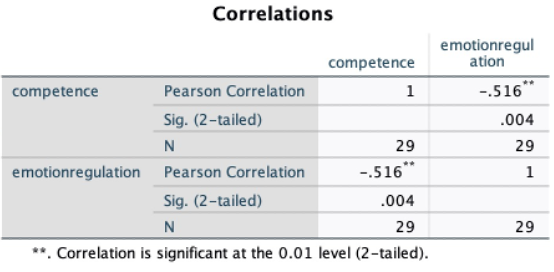
As shown in Table 1, there exists a statistically significant moderate negative correlation (r=-.516, p=.004) between students’ L2 academic writing competence and their use of emotion regulation strategies during peer academic writing tasks. This suggests that as students’ writing competence increases, their reliance on emotion regulation strategies tends to decrease, possibly due to fewer emotional challenges.
4.1.2 Regression between participants’ L2 writing competence and the use of emotion regulation
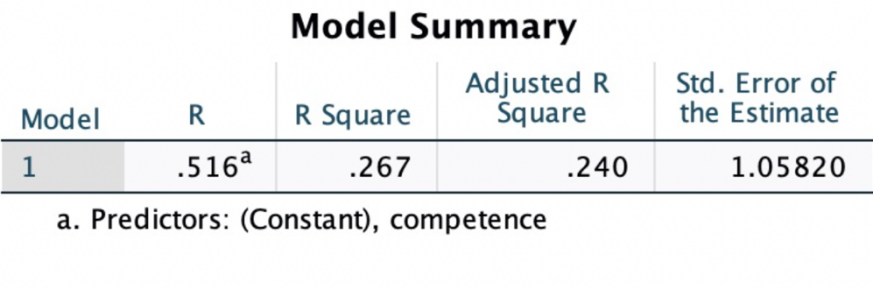
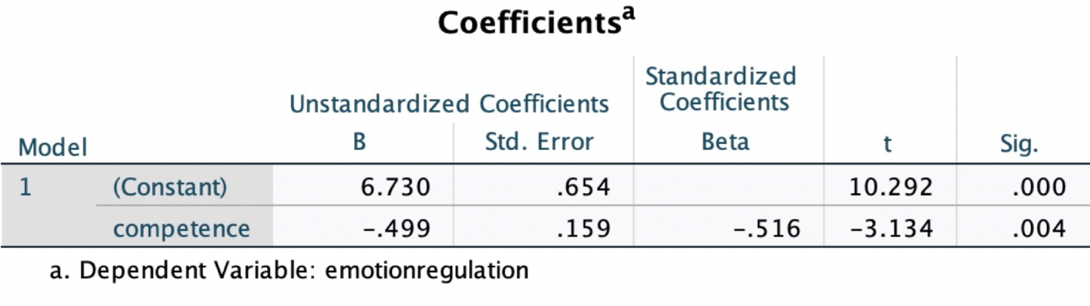
The regression analysis as presented in Table 2 and Table 3 further indicates that L2 writing competence explains 26.7% (R2=.267) of the variance in emotion regulation use, with a significant inverse relationship (B=-.499, p=.004). For every unit increase in competence, the use of emotion regulation decreases by approximately 0.499 units. However, the modest R2 value suggests that other factors, such as self-confidence, task difficulty, or collaboration skills, likely contribute to students’ emotion regulation behaviors. These findings emphasize the need for additional support for less competent writers, who may face greater emotional challenges requiring active regulation, while also highlighting the complexity of emotion regulation in collaborative L2 academic writing.
4.2 Findings Based on Semi-structured Interviews
4.2.1 Situation Modification as practical emotion regulation during collaborative L2 academic writing process
Emotionally, the biggest challenge for me is probably myself because I sometimes feel that my own ideas may conflict with what I initially thought, and I can be really stubborn about my own perspective (and want to stick to it). …It also depends on the style of your group members … I remember when I was in a group with Jimmy and my biggest challenge was dealing with him. He’s really a very authoritarian person, he cares a lot about his part’s percentage… Sometimes, Jimmy said how the group member’s writing sucked and asked me to tell them to revise it, making me the one who offended others. Even when the group members worked hard to fix it, Jimmy was still unhappy and asked them to redo it again… I didn’t know how to handle those emotions or what to do, or should I talk to those group members about it... In the project, he was the leader, and I ended up in the coordinator role, where I had to manage tasks and deal with emotions. I felt like I was a middle leader who had to take instructions from the boss and take care of my subordinates’ emotions.
[Excerpt 1, Cinderella, Interview 1]
The above excerpt provides a compelling example of emotion regulation in Cinderella’s collaborative writing process, emphasizing how she utilized situation modification to manage emotional challenges within her pair dynamics. At first, Cinderella experienced internal conflict, feeling torn between her commitment to her own ideas and a sense of guilt toward her group members for prioritizing her perspectives. This tension underscores her awareness of the complexities involved in balancing individual contributions and group harmony in collaborative academic work. Her challenges were further intensified in her interactions with Jimmy, a group member with an authoritarian and critical personality. Jimmy’s insistence on perfection and his critical remarks about other members’ work created a tense environment. As the group coordinator, Cinderella found herself in a mediating role, navigating between Jimmy’s demands and the emotional well-being of her teammates. Rather than confronting Jimmy directly, Cinderella modified the situation by actively reframing her role. She positioned herself as a mediator, prioritizing communication and collaboration to diffuse tension within the group. By taking on this coordinating role, she shifted the group dynamic to minimize conflict and maintain productivity, demonstrating her use of situation modification. Cinderella’s approach aligns with Petrova and Gross (2023) framework of emotion regulation, particularly the proactive strategy of altering a situation to influence its emotional impact. By reframing her role and facilitating smoother interactions, she reduced the emotional strain for both her and her group. This highlights the effectiveness of situation modification in addressing interpersonal challenges and maintaining group cohesion. Through these efforts, Cinderella successfully regulated her emotions, enabling her to contribute meaningfully to the collaborative writing process despite the difficulties posed by group dynamics.
4.2.2 Cognitive Change as Practical Emotion Regulation During Collaborative L2 Academic Writing Process
I feel guilty because she’s always thinking while I’m just completing the tasks she assigns... I didn’t really help. It makes me wonder why I can’t be the one assigning tasks to others... But later, she told me that I just need time to think things through... and sometimes I think the best ideas may come to us unexpectedly while we’re in the process of doing things, even if they come slowly.
[Excerpt 1, Tara, Interview 3]
The above excerpt reveals a clear instance of emotion regulation in Tara’s collaborative writing process, illustrating the emotional conflict she initially experienced and the regulatory process she underwent. At first, Tara felt guilt and frustration, driven by self-doubt about her writing competence and concerns over her unequal contribution to the group. She perceived her teammate as more proactive and dominant in the task, while she herself was passively completing assigned tasks, leading to feelings of inadequacy. However, after receiving kind words as reassurance from her peer, Tara experienced a shift in perspective, reflecting a key process in emotion regulation. As Petrova and Gross (2023) suggested, cognitive change involves altering one’s perception of a situation to manage emotional responses. Through this cognitive reappraisal, Tara reframed her self-evaluation and redeveloped her mindset of viewing this incident. Instead of blaming herself for being ineffective or passive, she reassured herself that quality ideas take time to emerge and that being slightly slower was acceptable and normal. With her peer’s help, Tara came to understand that although thinking through problems might take longer, the outcomes could be more valuable and worth the time. It is evident that this reappraisal allowed Tara to successfully regulate her emotions, enabling her to continue working collaboratively on the L2 academic writing task. By adjusting her perception of her pace and her role within the team, Tara embraced herself as a thoughtful thinker rather than focusing on her perceived slowness. This process of emotion regulation was essential in her ability to contribute to the task with more confidence.
5. Discussion
Our study demonstrates a robust inverse association between perceived proficiency in L2 academic writing and the frequency of emotion regulation (ER) strategies used during collaborative academic writing. Specifically, students who rated their writing proficiency higher consistently reported lower ER frequency, with a moderate negative correlation explaining about 27% of the variance. Importantly, this association held consistently across all stages of the collaborative writing task, suggesting a stable relationship. While proficiency establishes a baseline for emotional demands in collaboration, subsequent ER strategy use appears to be heavily influenced by social and evaluative contexts within the groups. This interpretation aligns with the theoretical frameworks proposed by Gross’s ER process model, which differentiates clearly between proactive and reactive strategies, and with empirical findings from small-group learning literature emphasizing the role of social interactions in shaping emotional regulation.
The observed relationship between proficiency and ER frequency is coherent and clearly explained through Gross’s process model. According to this model, emotion regulation involves distinct strategies that intervene at various stages in emotional episodes. These include antecedent-focused strategies (situation selection and situation modification), attentional deployment (redirecting attention), cognitive change (reinterpretation or reappraisal), and response modulation (suppression of emotional responses) (Mežek, 2013). Our findings indicate that higher-proficiency students more frequently utilize antecedent-focused strategies. Specifically, they proactively structure group interactions and tasks to prevent or minimize emotional triggers such as uncertainty, conflict, or critical evaluations. Interviews illustrate vividly how higher-proficiency groups systematically adopted strategies like clearly defined task divisions, constructive framing of critical feedback, and deliberate management of peer interactions to preempt emotional strain. Conversely, lower-proficiency groups consistently relied more on reactive ER strategies, notably cognitive reappraisal and emotional suppression, due to higher emotional uncertainty, evaluative pressures, and frequent interpersonal conflicts. The increased frequency and intensity of ER observed among lower-proficiency groups thus appears to reflect greater reliance on socially demanding strategies aimed at managing ongoing emotional tensions, rather than mere increased emotional vulnerability or lower emotional skillfulness.
Further insights emerged from detailed qualitative analysis concerning social roles within collaborative groups. A salient pattern across groups involved the frequent emergence of two distinct roles: a student assuming an authoritative evaluative role and another taking on a mediating or coordinating role. The authoritative role commonly intensified emotional pressures through evaluative critique, leading group members to experience increased tension and stress (MacIntyre, 1999). To manage these emotional tensions, coordinator figures employed situation modification strategies, actively mediating interactions, redistributing emotional stress, and reframing critical feedback in less threatening terms. Qualitative examples provided compelling evidence of this dynamic. In typical cases, coordinators systematically reframed negative evaluations to maintain group harmony, while peers experiencing criticism utilized cognitive reappraisal strategies to manage self-doubt and negative emotional reactions. This dynamic, while instrumental in managing group tensions, disproportionately increased emotional burdens for lower-proficiency groups. Thus, the frequency and intensity of ER strategies within collaborative tasks reflect not only linguistic proficiency but also the interpersonal roles and evaluative styles enacted within the group.
Our study significantly extends previous literature on collaborative L2 academic writing and emotional regulation in three ways. First, it provides clear empirical evidence quantifying the relationship between proficiency and the frequency and types of ER strategies in collaborative writing contexts. Previous studies extensively documented the cognitive and linguistic benefits of collaborative writing but rarely measured or explicitly described the emotional demands inherent in these tasks. By quantifying the concept of “emotion-regulation load”, defined in this study as the observed frequency of ER episodes, our research clarifies how differences in proficiency influence emotional dynamics in collaborative tasks. Second, the explicit application of Gross’s ER model in a collaborative L2 writing context clarifies the distinct types of strategies students employ at varying proficiency levels. Unlike previous research that generally relied on broad terms such as “coping”, our approach clearly delineates proactive and reactive ER strategies, thereby providing greater theoretical precision. Third, our study extends previous findings from online collaborative writing literature to face-to-face academic contexts. While online studies typically emphasized affective climate and enjoyment, our research introduces proficiency as a critical factor that shapes ER frequency and strategy use in face-to-face collaborative academic writing contexts. This provides a richer understanding of how emotional regulation functions differently depending on both proficiency levels and social dynamics within groups.
Several alternative explanations were carefully considered. First, reliance on self-report measures of both perceived proficiency and ER frequency raises concerns about common-method bias potentially inflating the observed correlation. To mitigate this issue, we triangulated survey results with qualitative interviews, which independently confirmed the quantitative patterns and provided detailed insights into specific ER strategies and episodes. Second, other unmeasured variables, such as general academic self-efficacy, collaborative skills, or individual personality traits, might simultaneously influence perceived proficiency and ER demands. The moderate R² supports the possible presence of these factors, but our interpretation explicitly acknowledges proficiency as a foundational determinant rather than the sole driver of ER frequency. Third, potential effects of specific writing stages or task complexity on ER patterns were considered. However, participants consistently emphasized minimal variation across writing stages, highlighting social interactions and evaluation styles as primary emotional triggers (MacIntyre, 1999; Pintrich & Zeidner, 2000). This participant perspective aligns closely with qualitative observations and suggests limited explanatory power of stage-based factors. Moreover, sensitivity analyses using alternative statistical methods yielded consistent results, reinforcing the robustness of our findings and interpretations (Liu & Li, 2024).
Our conclusions must be interpreted within certain methodological and practical constraints. The study involved intact undergraduate student groups engaging in authentic collaborative academic writing tasks within an English-medium program, which limits generalizability primarily to similar higher-education contexts. Additionally, perceived proficiency was assessed through students’ self-reports rather than standardized proficiency tests, potentially conflating linguistic competence with self-confidence or self-perception biases. Furthermore, because group roles emerged naturally rather than through experimental manipulation, we cannot make causal claims about how specific roles or proficiency levels directly cause changes in ER demands. Nevertheless, the consistency across quantitative and qualitative results, coupled with the participants’ own detailed descriptions, significantly strengthens our interpretations and their practical applicability.
The implications of our findings are both theoretical and practical. Theoretically, this study effectively integrates interactionist and output-based perspectives on L2 writing with Gross’s ER framework, proposing a “load-and-roles” conceptual model. In this model, proficiency sets baseline emotional regulation demands, while social roles and interaction styles determine the frequency and composition of ER strategies subsequently employed. Practically, our findings provide clear guidance for instructional design aimed specifically at reducing social-emotional burdens within collaborative writing tasks. Recommended instructional practices include explicitly structuring evaluative feedback to encourage cognitive reappraisal rather than suppressive responses, systematically rotating coordination roles to distribute emotional labor equitably, and adopting structured task-management tools such as decision logs and time-bound agendas that proactively minimize reactive ER demands. These recommendations directly target the social contexts and ER patterns we identified, offering concrete strategies educators can use to facilitate effective, emotionally sustainable collaboration.
Future research should systematically build upon our findings through three specific avenues. First, experimental studies are needed to test structured evaluative feedback interventions, comparing deficit-based critique with feedback explicitly designed to encourage cognitive reappraisal, to evaluate effects on ER frequency, strategy choices, and collaborative writing outcomes. Second, training interventions that explicitly teach students specific ER strategies aligned with collaborative roles, such as equipping coordinators with situation modification skills or authoritative peers with cognitive reappraisal techniques, should be developed and empirically tested. Third, future research could employ advanced methodological approaches that integrate traditional surveys with real-time observational or momentary assessment data. These approaches would allow researchers to more precisely measure the timing, intensity, and effectiveness of ER strategies used by students during authentic collaborative writing activities, providing deeper insights into effective emotional management practices.
In conclusion, this study clarifies the significant relationship between perceived L2 academic writing proficiency and the frequency and social composition of ER strategies within collaborative writing contexts. By empirically quantifying the influence of proficiency on ER frequency and qualitatively detailing specific ER strategies and social dynamics, our findings offer valuable insights into managing the emotional demands of collaborative writing. These results underscore the importance of designing instructional practices that explicitly consider emotional regulation, ultimately supporting more effective and emotionally sustainable academic collaborations.
6. Conclusion
This study advances a simple, actionable claim: in collaborative L2 academic writing, proficiency sets the height of an emotion‑regulation load curve, and team roles and evaluative scripts route the remaining burden. Across intact undergraduate teams coauthoring research‑style texts, higher perceived L2 academic writing proficiency was consistently associated with lower regulation frequency, and participants located the heaviest demands not in the formal stages of writing but in social coordination, authority dynamics, and the tenor of critique. Put differently, skill compresses how often students must regulate; interaction design determines whether that regulation is preventive and light‑touch or reactive and socially expensive. This load‑and‑roles perspective integrates process‑model theory with interactionist accounts of L2 writing and explains why nominally identical assignments feel so different across ability bands. For practice, the implication is to redesign collaboration, so the context requires less regulation: normalize reappraisal‑first feedback, rotate coordination to diffuse emotional labor, and scaffold situation modification with decision logs, time‑boxing, and explicit escalation rules. Our evidence is observational and bounded by university settings and perceived competence, but the pattern is convergent across methods and robust to alternative specifications. A natural next step is to experimentally vary evaluative scripts and behaviorally code strategy deployment in vivo, turning this regularity into a scalable pedagogy for emotionally sustainable, higher‑quality collaborative writing.
Ethical considerations
The study received institutional ethics approval before data collection commenced. All participants provided written informed consent and were reminded that participation was voluntary and could be discontinued at any point without academic consequence.
References
- [1]
Anela, N.-M., Katica, B., & Jasminka, B.-M. (2022). SELF-REGULATED LEARNING AND SOCIODEMOGRAPHIC FACTORS IN STUDENTS’L1/L2 WRITING PROFICIENCY. Journal of language and education, 8(1 (29)), 100–116.
- [2]
Ao, S. H., Zhang, L., Liu, P. L., & Zhao, X. (2023). Social media and partnership jointly alleviate caregivers' psychological distress: exploring the effects of online and offline connectedness. BMC psychology, 11(1), 394. https://doi.org/10.1186/s40359-023-01415-9
- [3]
Berk, R. (2005). Randomized experiments as the bronze standard. Journal of experimental criminology, 1, 417–433.
- [4]
Berk, R. (2008). Statistical learning from a regression perspective (Vol. 14). Springer.
- [5]
Berk, R. A., Brown, L., George, E., Pitkin, E., Traskin, M., Zhang, K., & Zhao, L. (2013). What you can learn from wrong causal models. Handbook of causal analysis for social research, 403–424.
- [6]
Cheng, Y. S. (2004). A measure of second language writing anxiety: Scale development and preliminary validation. Journal of Second Language Writing, 13(4), 313–335. https://doi.org/10.1016/j.jslw.2004.07.001
- [7]
Cohen, J. (1994). The earth is round (p<. 05). American Psychologist, 49(12), 997.
- [8]
Csizér, K., & Tankó, G. (2017). English majors’ self-regulatory control strategy use in academic writing and its relation to L2 motivation. Applied linguistics, 38(3), 386–404.
- [9]
De Larios, J. R., Murphy, L., & Marín, J. (2002). A critical examination of L2 writing process research. In New directions for research in L2 writing (pp. 11–47). Springer.
- [10]
Dong, L. (2024). Examining the relationship between socioeconomic status, self-regulated learning strategies, and writing proficiency in English as a second language learning context. Journal of Educational Psychology, 116(5), 686.
- [11]
Freedman, D. A. (1985). Statistics and the Scientific Method. In W. M. Mason & S. E. Fienberg (Eds.), Cohort Analysis in Social Research: Beyond the Identification Problem (pp. 343–366). Springer New York. https://doi.org/10.1007/978-1-4613-8536-3_11
- [12]
Freedman, D. A. (1991). Statistical Models and Shoe Leather. Sociological Methodology, 21, 291–313. https://doi.org/10.2307/270939
- [13]
Gao, Q., Li, D., Wang, Y., Zhao, C., Li, M., Xiao, J., Kang, Y., Lin, H., & Wang, N. (2024). Analysis of intestinal flora and cognitive function in maintenance hemodialysis patients using combined 16S ribosome DNA and shotgun metagenome sequencing. Aging Clin Exp Res, 36(1), 28. https://doi.org/10.1007/s40520-023-02645-y
- [14]
Gross, J. J. (2015). The Extended Process Model of Emotion Regulation: Elaborations, Applications, and Future Directions. Psychological Inquiry, 26(1), 130–137. https://doi.org/10.1080/1047840X.2015.989751
- [15]
Gui, M., Chen, X., & Verspoor, M. (2021). The dynamics of reading development in L2 English for academic purposes. System, 100, 102546. https://doi.org/10.1016/j.system.2021.102546
- [16]
Horwitz, E. K. (1986). Preliminary evidence for the reliability and validity of a foreign language anxiety scale. Tesol Quarterly, 20(3), 559–562.
- [17]
Horwitz, E. K., Horwitz, M. B., & Cope, J. (1986). Foreign language classroom anxiety. The Modern language journal, 70(2), 125–132.
- [18]
Järvenoja, H., Järvelä, S., Törmänen, T., Näykki, P., Malmberg, J., Kurki, K., Mykkänen, A., & Isohätälä, J. (2018). Capturing motivation and emotion regulation during a learning process. Frontline Learning Research, 6(3), 85–104.
- [19]
Jinxiao Ginnie, L. (2024). The Role Play of International Comity and Conflict Resolution in the Injunction System --Taking HUAWEI v. CONVERSANT as an Example. Social Flourishing, 1(1), 1–11. https://doi.org/10.63336/SocFlourish.3
- [20]
King, R. C. (1986). How to Abbreviate Recombinant Genes. Nature, 322(6082), 780–780. https://doi.org/DOI 10.1038/322780b0
- [21]
Lam, R. (2015). Feedback About Self-Regulation: Does It Remain an" Unfinished Business" in Portfolio Assessment of Writing? Tesol Quarterly, 49(2), 402–413.
- [22]
Lee, M.-K. (2015). Peer feedback in second language writing: Investigating junior secondary students' perspectives on inter-feedback and intra-feedback. System, 55, 1–10.
- [23]
Li, D., Zhang, H., & Ju, Q. (2025). Statistical Significance, Narrative, and the Scholastic Fallacy: How Ritualized Statistics Exaggerate Social Science Theories. Transformative Society, 1(2), 39–62. https://doi.org/10.63336/TransSoc.28
- [24]
Li, X., Yu, Z., & Zhang, X. S. (2025). Can the application of artificial intelligence in criminal investigation reduce regional criminal offences? The moderating effect of digital financial development. Finance Research Letters, 82, 107563. https://doi.org/ 10.1016/j.frl.2025.107563
- [25]
Liu, J., & Li, D. M. (2024). Is Machine Learning Really Unsafe and Irresponsible in Social Sciences? Paradoxes and Reconsideration from Recidivism Prediction Tasks. Asian Journal of Criminology, 19(2), 143–159. https://doi.org/10.1007/s11417-024-09429-x
- [26]
Liu, J., Li, D. M., Ju, Q. R., & Zhang, X. S. (2025). Structuring Macau’s Criminal Court Judgments with Large Language Models: Methodological Innovations for Data Accuracy and Sample Selection Bias. Asian Journal of Criminology, 21(1), 14. https://doi.org/10.1007/s11417-025-09475-z
- [27]
Liu, J. G. (2024). Analysis of the EU Anti-dumping Cost-adjustment Method and China’s Response Strategy--Argentina v. European Union Anti-Dumping on Biodiesel as an Example. Accelerated Society, 1(1).
- [28]
MacIntyre, P. D. (1999). Language anxiety: A review of the research for language teachers. Affect in foreign language and second language learning: A practical guide to creating a low-anxiety classroom atmosphere, 24(1), 34–70.
- [29]
Maoyi, C., Ziyi, Z., Yikai, M., Shuxian, L., Jiangrui, C., & Xiaoran Sarah, Z. (2025). Innovation and Sustainable Development Pathways of Elderly Education Models in Rural China——A Qualitative Dual-Case Study from Fujian Province. Social Flourishing, 1(1), 25–37. https://doi.org/10.63336/SocFlourish.22
- [30]
Mežek, Š. (2013). Multilingual reading proficiency in an emerging parallel-language environment. Journal of English for Academic Purposes, 12(3), 166–179.
- [31]
Pecorari, D., Shaw, P., Irvine, A., Malmström, H., & Mežek, Š. (2012). Reading in tertiary education: Undergraduate student practices and attitudes. Quality in Higher Education, 18(2), 235–256.
- [32]
Petrova, K., & Gross, J. J. (2023). The future of emotion regulation research: Broadening our field of view. Affective Science, 4(4), 609–616.
- [33]
Pintrich, P. R., & Zeidner, M. (2000). Handbook of self-regulation. Elsevier Science & Technology.
- [34]
Pritchard, R. M., & Nasr, A. (2004). Improving reading performance among Egyptian engineering students: principles and practice. English for Specific Purposes, 23(4), 425–445.
- [35]
Qiu, S. S., Zhang, L., You, F., & Zhao, X. (2025). Unpacking media channel effects on AI perception: A network analysis of AI information exposure across channels, overload, literacy, and anxiety among Chinese users. Computers in Human Behavior, 173, 108790. https://doi.org/ 10.1016/j.chb.2025.108790
- [36]
Sellers, V. D. (2000). Anxiety and reading comprehension in Spanish as a foreign language. Foreign Language Annals, 33(5), 512–520.
- [37]
Wertsch, J. V. (1979). From social interaction to higher psychological processes. A clarification and application of Vygotsky’s theory. Human development, 22(1), 1–22.
- [38]
Wood, D., Bruner, J. S., & Ross, G. (1976). The role of tutoring in problem solving. Journal of child psychology and psychiatry, 17(2), 89–100.
- [39]
Wu, Y., Zhang, L., & Zhao, X. (2025). Linking online health information seeking to cancer information overload among Chinese cancer patients’ family members. Digital Health, 11, 20552076251336308. https://doi.org/10.1177/20552076251336308
- [40]
Xian, X., Zhang, X., Zheng, D., & Wang, Y. (2024). Mental Health Benefits of Listening to Music During COVID-19 Quarantine: Cross-Sectional Study. JMIR Form Res, 8, e46497. https://doi.org/10.2196/46497
- [41]
Zhang, L., Ao, S. H., & Zhao, X. (2023). Longitudinal relationship between social media and e-cigarette use among adolescents: the roles of internalizing problems and academic performance. BMC Public Health, 23(1), 2133. https://doi.org/10.1186/s12889-023-17059-8
- [42]
Zhang, L., Ao, S. H., & Zhao, X. (2024). A four-year longitudinal analysis examining the effects of e-cigarette advertisements and disparities among youth with internalizing problems. Addictive Behaviors, 153, 108002. https://doi.org/ 10.1016/j.addbeh.2024.108002
- [43]
Zhang, L., Harris Ao, S., Francis Ye, J., & Zhao, X. (2024). How does health communication on social media influence e-cigarette perception and use? A trend analysis from 2017 to 2020. Addictive Behaviors, 149, 107875. https://doi.org10.1016/j.addbeh.2023.107875
- [44]
Zhang, L., Xie, Q., Qiu, S., Liu, M., You, F., & Zhao, X. (2025). Willing or reluctant to share health data? A moderated mediation analysis of wearable device usage and data-sharing intentions among older adults. Digital Health, 11, 20552076251337948. https://doi.org/10.1177/20552076251337948
- [45]
Zhang, L., Ye, J. F., & Zhao, X. (2024). “I Saw it Incidentally but Frequently”: Exploring the Effects of Online Health Information Scanning on Lung Cancer Screening Behaviors Among Chinese Smokers. Health Communication, 1–12. https://doi.org/10.1080/10410236.2024.2345948
- [46]
Zhang, L. J. (2010). A dynamic metacognitive systems account of Chinese university students' knowledge about EFL reading. Tesol Quarterly, 44(2), 320–353.
- [47]
Zhang, Z., Gao, X., Liu, T., & Lee, C. B. (2022). Language Learners' Emotion Regulation and Enjoyment in an Online Collaborative Writing Program. Studies in Second Language Learning and Teaching, 12(3), 459–481.
- [48]
Zhao, X., Li, D. M., Lai, Z. Z., Liu, P. L., Ao, S. H., & You, F. (2024). Percentage Coefficient (bp)--Effect Size Analysis (Theory Paper 1). arXiv preprint arXiv:2404.19495.